


The trouble started in the second week. A large German manufacturer had rolled out an app that let its assembly-line workers trade shifts: propose a swap, someone accepts it, done. It was built to free their foremen of menial work. Two weeks in, these same foremen were overriding most of the shift changes and complaining about the chaos the app was creating.
The app was first updated, then tweaked and then thoroughly reworked, but the overrides continued. Then an approval step was added to give the foremen more control. Then the notification logic was adjusted. Then the interface was rebuilt. And still: the overrides continued unchanged, albeit through a significantly more pleasant interface.

After enough rounds of this, somebody went down to the floor and watched. No survey, no workshop, no interviews, just a shift observed from a glass cubicle right next to the line.
The app aimed to replace busywork, and it did, splendidly. But it also replaced a ritual: for decades, a worker who wanted to trade a shift went to the foreman and asked. That swap request, it turned out, had been the plant’s only recurring one-on-one between a foreman and each of his workers. Two minutes, maybe three, about something small and safe, initiated by the worker. Inside those minutes, everything else surfaced: that someone’s kid was being bullied at school, that a good machinist had oddly precise questions about notice periods, that the new hire was avoiding someone. A foreman with a just-in-time team of thirty cannot schedule candor, but the swap conversation produced it on its own, at a steady trickle, for free. Swapping shifts in a messy excel file had been menial work for the foremen, yes. But it was also the plant’s early-warning system, and a genuinely good app had just switched it off.

The shift swap conversation was an informal process. An essential one, with tremendous impact on the trajectory of everyday operations. It was recurring, load-bearing, and consequential, but existed out of view of every position that could own it, staff it, or fund it. No document, no dashboard, no org chart noted its existence.
In the 1970s, astronomy ran into this exact problem. Vera Rubin found that stars at the edges of galaxies were moving far too quickly. Given what was visibly there – stars, gas, dust – galaxies spinning at that rate should fly apart. They did not. So either gravity was failing at galactic scales, or there was something out there that didn’t emit light, didn’t reflect it either, and revealed itself only through its influence on everything else. Astronomers named it dark matter, and by current accounting it outweighs all the visible matter in the universe about five to one. Today, fifty years on, no instrument has caught a particle of it yet. Its entire existence is proven by the motion of everything else: things behave as if it were there.
Informal processes are the dark matter of organizations. Direct inspection in a mapping workshop or process review won’t find them; what gives them away are behaviors and dynamics that formal activities alone cannot account for. In the case of our assembly lines, they made things run smoother, and a surplus of smoothness isn’t something an organization tends to investigate.
The origins of informal processes are worth taking apart, because their origin determines how to detect and handle them.
Some informal processes are fixes: When a formal process has a flaw – a missing step, an approval that arrives after the moment it was meant to govern, a system that demands information nobody has yet – the people inside it build a bypass so the work can survive the defects of its own procedure. The organization corrects itself, quietly, without a project or budget line. While this is, in general, a good thing, it also makes the defective formal process behind it appear to work. This is read as proof that the design was sound, delaying much needed improvements.
Other informal processes are improvements that live in the teams’ heads, because nobody ever turned them into structure. When an obviously better way of doing something emerges – found by accident, imported by a new hire, or worked out during a disruption – it tends to spread sideways, peer to peer, without ever passing through the hands of anyone entitled to make it official. Ten years later, the improvement is fully metabolized, and is now how the company actually does something, while the official procedure ages undisturbed on a sharepoint, like a national anthem everyone stands for and nobody sings.
And then there are the informal processes that are sediment, the residue of human beings working together. A handoff detours through a third department because, fifteen years ago, two long-gone managers stopped talking to each other. A weekly call exists because of a crisis nobody on the call was there for. A specific decision only happens in a specific Teams chat because everyone wants it on the record. Every company of any age is still burdened with these consequences of an old friendship, an old feud, or a misunderstanding nobody ever cleared up.
Very little of this informal layer is hidden or concealed. Most of it is invisible for the opposite reason: because everyone knows. A thing can be so thoroughly obvious to everyone that nobody has said it aloud in years, and what is never said never becomes a slide. Ask any team to walk you through how their work gets done and they will walk you through the formal system, honestly and completely, and never mention the informal part because it’s so obvious to them. Like explaining how to walk without ever mentioning shoelaces.
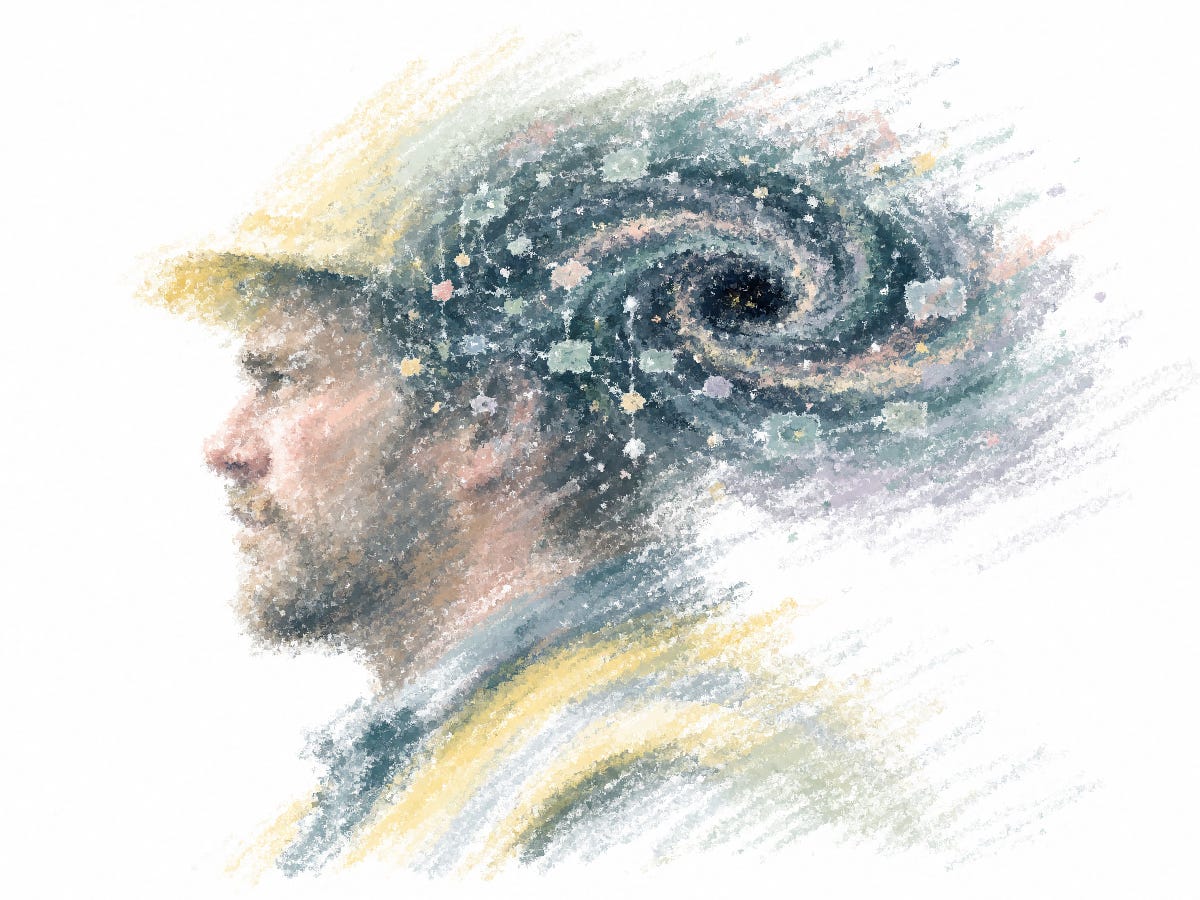
During ongoing operations, none of this needs to be visible, none of it needs to be actively considered. But when there’s restructuring, or new systems, or a merger, any change that doesn’t consider the informal layer runs the danger of unexpectedly breaking something important – like the shift app did.
The practical conclusion of this is modest: The informal layer belongs on everyone’s agenda. Ideally in mapped form, but at least assumed to be there, asked after, and treated as real whenever processes are reviewed, redesigned, or handed off to a system. Astronomers did not wait to see dark matter before putting it in their equations. A process review is better off to extend the same courtesy to the part of the company it cannot see. But the goal should be to not only map the known unknowns, but also the unknown unknowns.
Formal processes are a pleasure to map: They have owners you can interview, documents you can request, and systems that enforce their steps. The whole landscape of business activities can be assembled in conference rooms. Process experts love this: the satisfaction you get from neatly mapping something intricate, precise and important is why many people get into the profession.
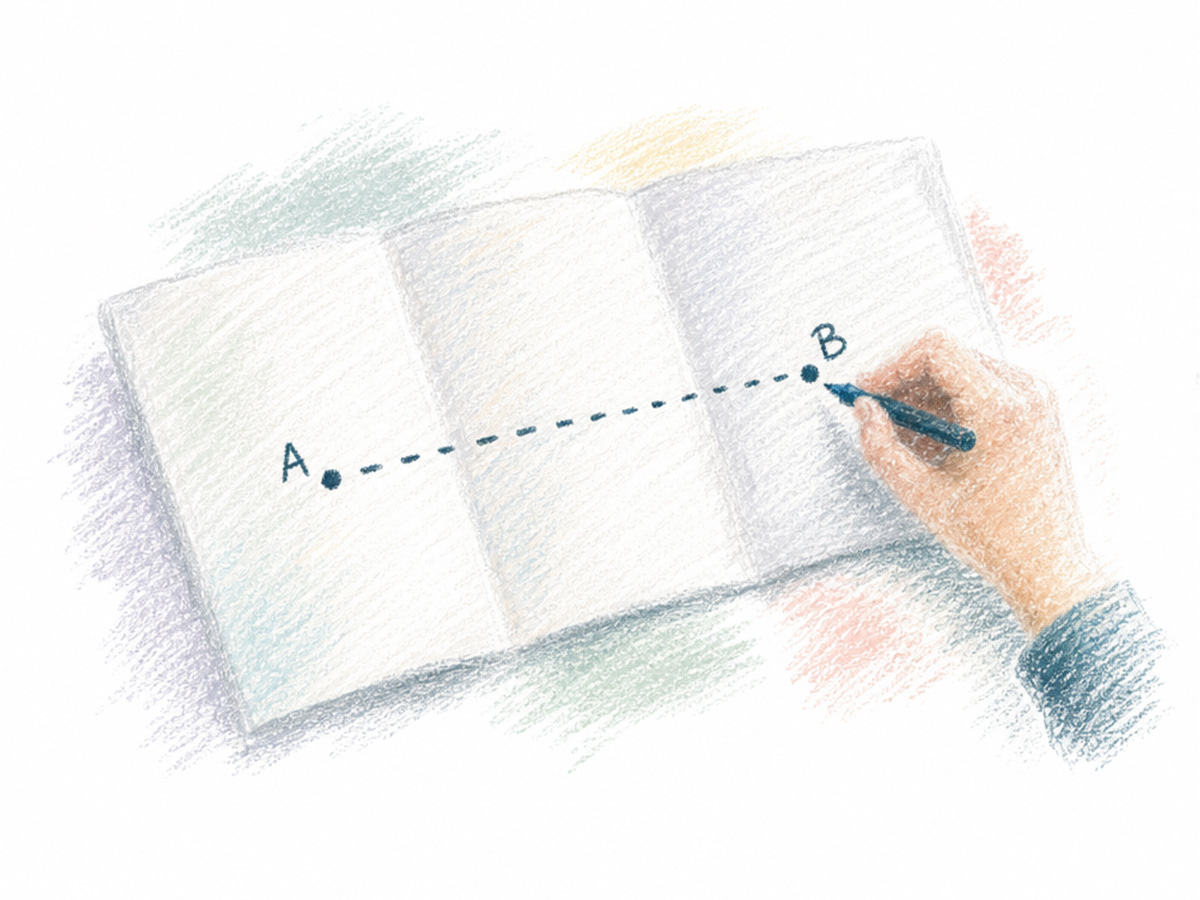
Mapping the informal layer is a fundamentally different craft. You cannot schedule the mapping of an informal process by name, because it doesn't have one. It surfaces through attention, experience, and presence: by seeing motion that doesn't fully match the official plan, by reacting to the weird silence in a formal mapping session, by sitting in on the shift change, and through the sideways questions sociologists live to ask: "What happens when this goes wrong? Who are you supposed to call, and who do you actually call?"
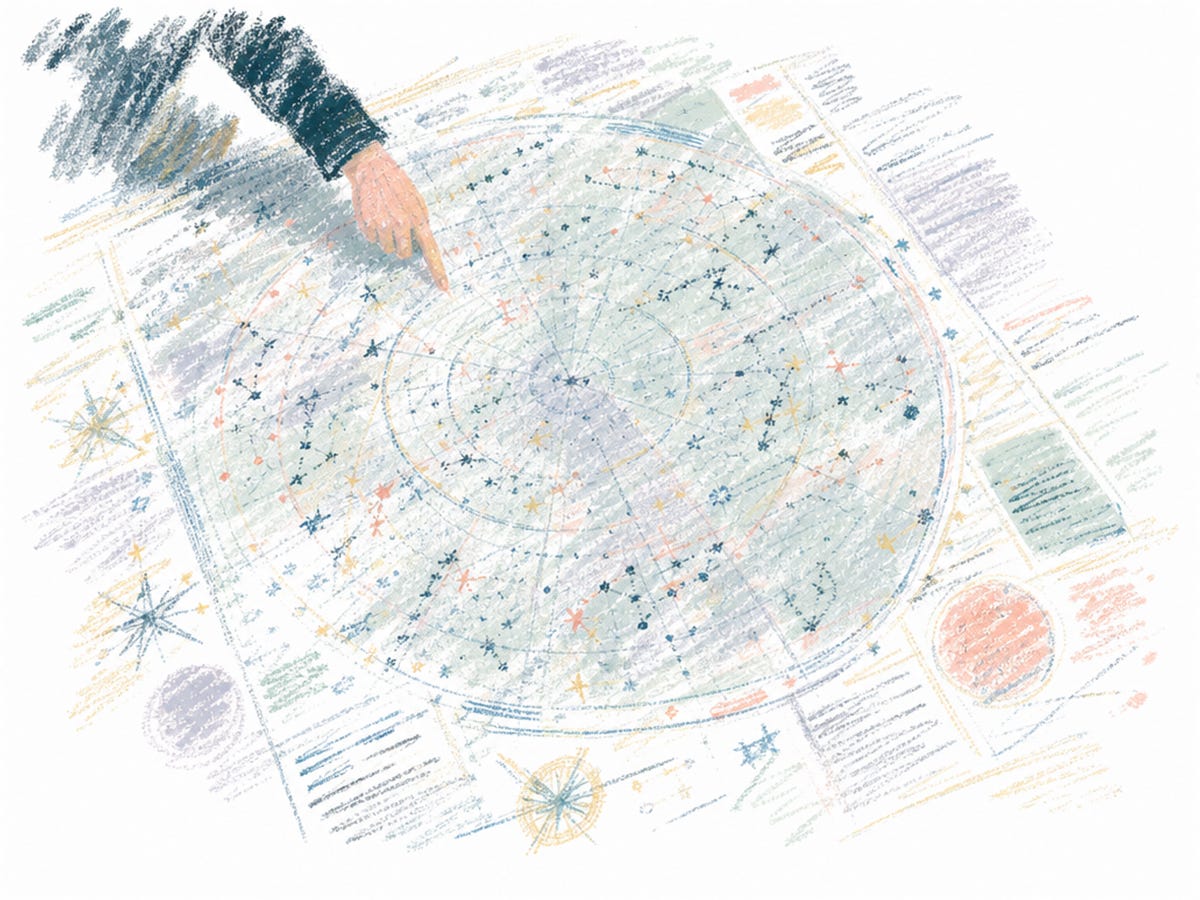
Most process consultants stay clear of such imprecise, fuzzy territory because it is slow, destroys deadlines, and demands a skillset that has nothing to do with notation. The visible mass of a company is easy to chart, so the professionals chart it, beautifully. The maps just tend to come out weighing a good deal less than the companies they describe.